Business
A living map of American dairy
How Land O’Lakes Dairy Foods shows up in regional tastes, histories and food traditions across the country
Across the country, Americans have different relationships with dairy. Those differences show up in the color of a cheese slice, the shape of a butter stick, the spread on a biscuit, the queso served with Tex-Mex or the familiar deli order passed across a counter.
For Land O’Lakes Dairy Foods, those preferences are not random. They are a living map of American history, shaped by geography, food culture, shopping habits and the communities that have kept certain traditions alive.
Since its formation in 1921, Land O’Lakes has helped connect dairy farmers and consumers across the country. But the way the Land O Lakes® brand shows up in each region has never been one-size-fits-all.
“Think about how large our country is,” says Vicky Cherne, recently retired consumer affairs manager. “You get these tremendous variations in the way they bake, the way they eat, what they like and what they do.”
The cooperative roots behind a national dairy brand
 To understand how Land O’Lakes became part of regional dairy habits, it helps to start with our cooperative story. In the late 1800s, Theophilus Levi Haecker, an expert in the science of buttermaking, traveled across Minnesota to help dairy plants improve and standardize butter production. He became an early champion of the cooperative model, helping persuade creameries to work together rather than compete alone. By the end of the decade, there were 438 co-op creameries in Minnesota.
Enter John Brandt, a dairy farmer from Lichfield, Minnesota. Brandt was elected as president of Meeker County Creamery Association in 1920, a federation of co-op creameries interested in reducing shipping costs and improving the quality of their butter.
 One year later, representatives from 320 Minnesota cooperative creameries met in St. Paul to form the Minnesota Cooperative Creameries Association, later renamed “Land O’Lakes, Inc.”
From the beginning, our cooperative model was about connection: connecting farmers to markets, improving quality and moving dairy products from the Midwest to the more densely populated Eastern regions.
“For Land O’Lakes, our cooperative story has made us the strongest in the Northeast,” says Pete Griffin, Dairy Foods director of market intelligence.
Click a region to explore
Use the color-coded map to jump into each regional story. Each click opens the full section text over the map.

Northeast: The deli counter — a community fixture
 In the Northeast, dairy preference is most visible at the deli counter. A customer can walk into a neighborhood deli and ask for “a pound of Land O Lakes® sliced thin,” and the person behind the counter usually knows exactly what they mean: Land O Lakes® Deli American.
Lori Kocer, marketing director for Butter, said the Northeast’s condensed population and shopping habits have helped shape that culture. People may shop more frequently, rely on smaller neighborhood stores and build relationships with the people behind the counter. That turns a simple grocery item into part of a routine, personal exchange.
The presence of delis in the Northeast ties back to immigration patterns. Jewish, Italian, German and Eastern European immigrants brought their delicatessen traditions to the region during the late 19th and early 20th centuries. Delis became community gathering places centered around meats, cheeses and prepared foods.
 “You can’t go five blocks in one direction or another from my house and not find two delis,” says Joe Andreo, a longtime Land O’Lakes sales leader based on Long Island. “If my family goes to the beach on a Saturday, we always go to the deli first and grab sandwiches.”
Deli culture helps explain why American cheese holds such a strong position in the region.
 “Between the Northeast and Chicago, there is a strong American cheese base of business,” Joe says. “As you start getting further West, it starts to go more to natural cheese like Swiss, provolone and muenster.”
White or yellow? The Northeast checkerboard
Within the Northeast, preferences vary even among American cheese consumers. White and yellow American may look different, but dairy experts say the distinction is largely just the color. Still, consumers often remain loyal to whichever version they ate growing up.
“It’s a checkerboard,” Joe says. “Technically, there isn’t much of a difference between the two. If you were blindfolded and tried both, you’d be hard pressed to tell me which one is yellow and which one is white.”
Parts of New England strongly prefer white American, while yellow varieties dominate around New York and portions of New Jersey, illustrating just how localized dairy preferences can be.
Midwest: The region that built modern dairy
The Midwest is the birthplace of Land O’Lakes and one of the country’s defining dairy regions. It’s where the cooperative story began, where butter quality became a point of pride and where cheese traditions are woven into everyday food and culture.
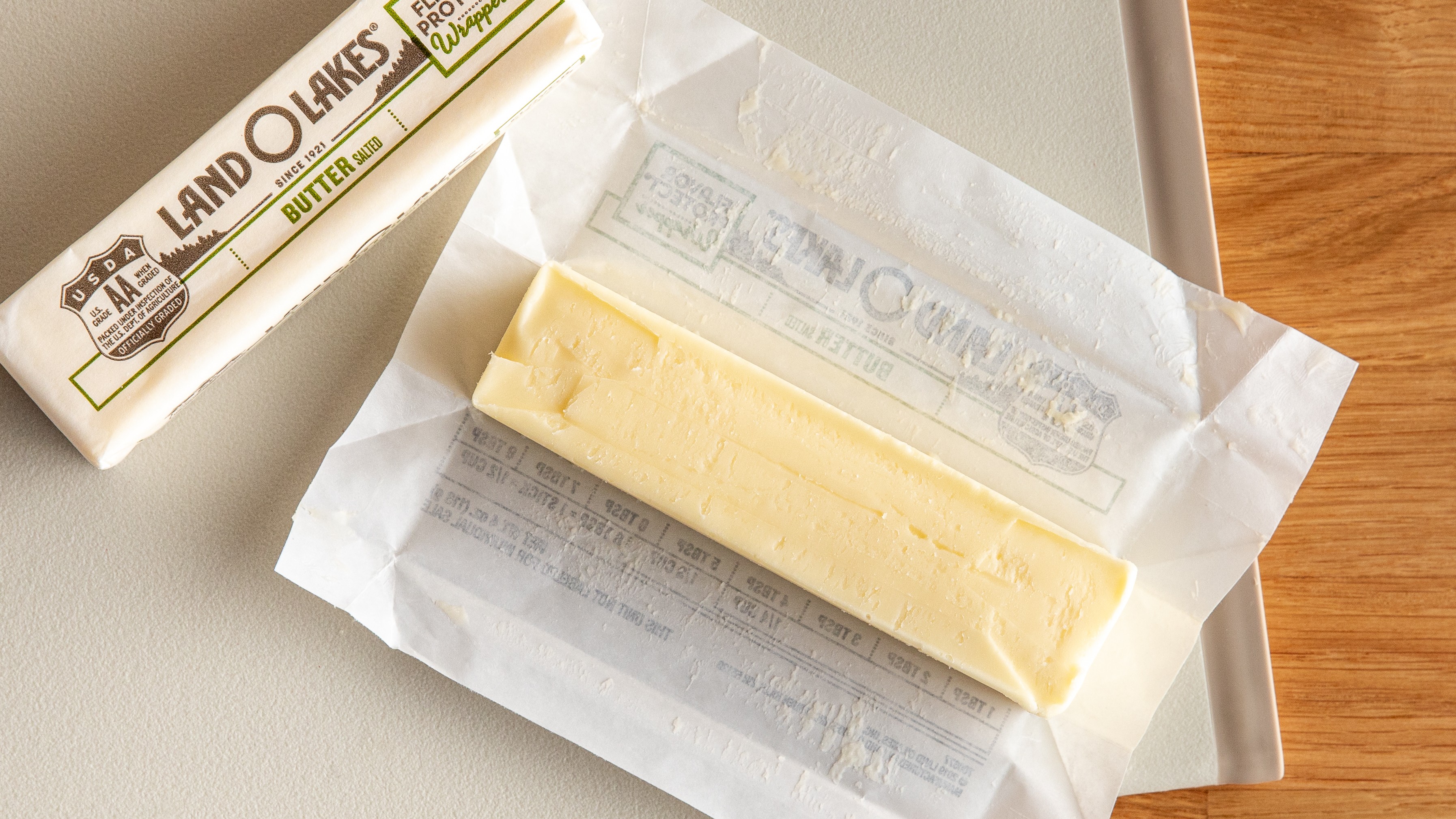
One of the clearest examples of regional dairy identity is the butter stick itself. East of the Rockies, many shoppers are accustomed to the longer, slimmer Elgin-style stick. In the West, shoppers are more likely to see the shorter, wider Western-style stick.
“The difference between Elgin and the Western ‘stubbies’ really was just the machine available and the preference in that area of the country,” says Vicky Cherne. “When Land O’Lakes acquired equipment in the West, we made the Western-style stick.”

The Elgin-style butter stick, the longer quarter-pound stick familiar to most Americans, originated in Illinois and became the standard east of the Rockies. The Western-style stick contains the same amount of butter but reflects a different manufacturing tradition that became established in Western markets.
 The Midwest’s dairy identity extends beyond production. Cheese curds, butter burgers, sweet corn with butter and the Juicy Lucy all reflect a regional culture where dairy remains central to everyday food traditions. Yellow cheddar dominates the region, accounting for 66.1% share compared with 6.6% for white cheddar. With award-winning cheddar produced at the Land O’Lakes plant in Kiel, Wisconsin, cheese remains an important point of regional pride.
South: Butter, queso and comfort food
The South’s dairy story is shaped by comfort food, baking traditions, Tex-Mex influence and long-standing household habits. Butter, margarine and queso each offer a different window into how dairy is used across the region.
“In the South, people don’t shy away from using butter the way some other parts of the country might,” says Kim Anderson, Culinary Center team leader.
 2026 consumer data show that Land O Lakes® Butter in Half Sticks accounts for a 47% greater share of butter volume sales in the South than the national average, likely reflecting the region’s strong baking and cooking traditions. Butter is a star ingredient in dishes like cornbread, biscuits, pound cake and many other staples.
 The South is also a key market for Land O’Lakes Foodservice, especially in the Queso category. Tex-Mex and Mex-American restaurant formats have created strong demand for cheese products and sauces used in queso, appetizers and entrees.
“Our Foodservice business does a ton of business in Queso, predominantly across the South,” says Lori Kocer.
Queso, as we know it today at Land O’Lakes, originated in the 1900s in San Antonio and has since become a staple party dip and restaurant dish in the South and around the country.
West: Later entry, a different butter stick and global flavors
In the West, Land O’Lakes appears in a different context. The region has its own dairy identity, shaped by local brands, organic preferences, natural food culture and global flavor influences.
“We first marketed products in the East, and, besides butter, we have the deli culture that increases awareness of Land O’Lakes,” says Vicky Cherne. “Some years after the start of the cooperative, butter distribution expanded to the West, but there’s not the same deep history and connection we see in the East.”
 The Western-style butter stick is a small but memorable example of that regional difference.
“People who move from the East or the Midwest to the West will call or email Consumer Affairs and ask, ‘Why can’t I get the regular sticks of butter? I want the skinny ones that fit in my butter dish,’” Vicky recounts.
 The West also over-indexes in organic and natural food preferences, according to Pete Griffin. Culinary Center team members connected the region to global flavors and flexible dairy applications, especially in foodservice.
“Where I see us appealing more to the West Coast is by leaning into global flavors,” says Beth Jones, Culinary Center associate marketing manager. “Our butter sauce is a great example because it can be used in sweet or savory applications and can work with Asian, North African and many other flavor profiles.”
The West’s cultural diversity continues to influence dairy consumption, with global flavors and fusion applications creating opportunities for products that serve a wide range of cuisines and occasions.
Land O’Lakes continues to adapt
Regional dairy preferences may seem small, but they reflect generations of history, cultures and traditions. From Northeastern delis and Midwestern cheddar to Southern queso and Western flavor exploration, each region tells a different story about how Americans eat.
For more than a century, Land O’Lakes has grown alongside those preferences, helping connect farmers and consumers while earning a place in distinct food cultures across the country. The result is not one national dairy story, but many regional stories woven together through a shared connection to dairy.